Bacterial skin infections: Signs and treatment options
1. Introduction
A tiny cut. It had been scratched just a bit too many times by an insect bite. A dry cracky skin patch, no big deal. Provide bacteria with the tiniest of opportunities and sometimes that’s enough.
In one day or two, it looks like nothing but goes red, hot and impossible to overlook. The truth of what’s really going on under the skin , and what to do about it , more often than not determines whether this is a quick fix or a larger headache.
2. What’s Actually Going On Under the Skin
Bacterial Skin Infections begin when bacteria which are normally harmless and live on the surface of the skin penetrate through the barrier to internal tissues. The place of entry is sometimes clear, a scratch, a nick cut in the skin, a blister which has burst.
At other times it is nothing more than a split line caused by the lack of moisture in the skin. In any case, the immune system recognizes quickly and that is what makes the area red, swollen and warm. Sometimes simple care takes care of some cases. Others do not and they require true treatment before they deteriorate.
3. Identifying Signs of Early Warning
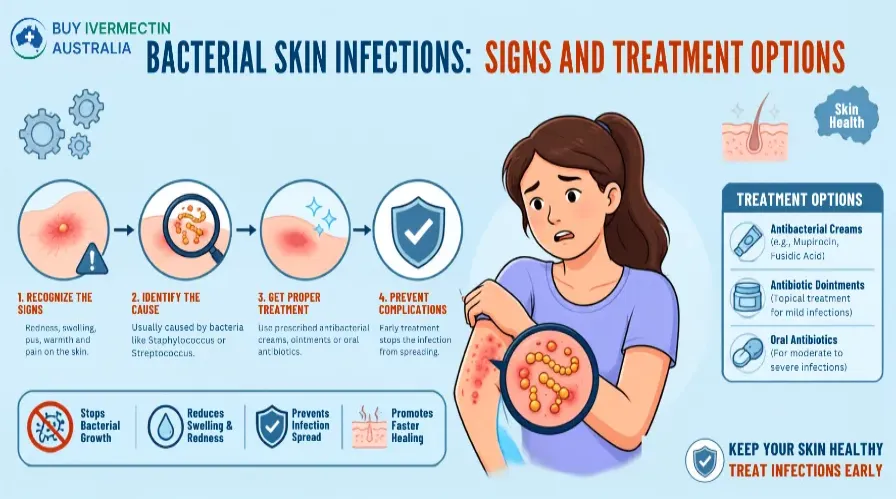
It’s easier to catch it early, so that it’ll be easier the rest of the way. One of the Bacterial Skin Infection Symptoms is a localized redness, tenderness and warmth that is different from a typical bruise ; it is more intense and more localized.
Leave it untreated for a day or two and the swelling usually increases, and in some cases, you’ll notice a few pus-filled blisters that develop, depending on the cause of the swelling. Fever. Chills. Radial streaks in red colors radiating from the site. Those are all things you shouldn’t expect, but rather they indicate that the body is trying to contain the infection.
4. The Different Forms this Kind of Infection Can Take
Each case is unique, as the bacteria present and the way the bacteria enter the body are different in every case. The Bacterial Infection on Skin may range from a small red patch, to an infection that can spread quickly and demand prompt medical attention.
For example, cellulitis will usually be widespread with a poorly delineated area of deep aching swelling. But impetigo can appear differently, typically as honey-colored crusted patches around the nose and mouth (more often in children than in adults).
There are boils and abscesses too: the problem is a lump containing pus, which forms around a hair follicle or blocked gland, and may have to be lanced before they can be treated with medicines.
5. Who Tends to be More at Risk
Some people just have a greater tendency to do so than others, and it typically depends on the body’s ability to ward it off. All three conditions (diabetes, low immunity and poor circulation) impair the body’s ability to contain an infection before it reaches a dangerous level.
Even if you have existing skin conditions such as eczema or psoriasis, it doesn’t help either as they already leave skin’s barrier compromised. It’s sometimes as simple as a dirty cut, a shared razor or skin that simply failed to heal.
6. Seeking Accurate Diagnosis
A doctor can usually tell a lot just by looking. But when the picture isn’t clear, or a first round of treatment hasn’t worked, a swab or culture from the site can pin down exactly which bacteria are involved.
If there’s concern the infection has moved past the skin itself, blood tests come into the picture too. It sounds like a small detail, but treating the wrong cause with the wrong approach wastes time nobody wants to lose.
7. Common Ways Doctors Approach Recovery
Skin Infection Treatment isn’t a single fix-all , it depends on how deep the infection goes, where it is, and what’s causing it. Here’s what tends to show up on a treatment plan:
- Topical antibiotic ointments or creams for mild cases that haven’t spread far
- Oral medication when the infection runs deeper or topical treatment alone isn’t cutting it
- Drainage procedures for boils or abscesses that have built up a pocket of pus
- Warm compresses to ease discomfort and help drainage along in milder cases
- Pain relief medication to take the edge off swelling and tenderness while things heal
- Follow-up cultures if symptoms hang around, to check whether a different medication is needed
8. Why Finishing the Full Course Matters
Here’s a mistake that happens more often than it should: stopping treatment the moment things look better. Bacterial infections can come back stronger and harder to treat if medication is cut short, even when the skin’s already looking mostly normal after a few days.
Finishing the full course gives the medication time to actually clear the problem, not just knock it down temporarily. Stopping early is also one of the bigger reasons drug resistance keeps growing , and that’s a problem well beyond just one infection.
9. Everyday Habits that Support Recovery and Prevention
Good Skin Care does more for prevention than most people give it credit for. Keeping cuts clean, moisturized, and covered cuts down on bacteria’s chances of getting in during healing. Harsh soaps, tight clothing, constant scratching , all of it can trigger unnecessary Skin Inflammation and slow things down further.
Worth mentioning too: antiparasitic treatments people sometimes come across while searching terms like buy ivermectin australia target a completely different kind of organism and won’t do anything for a bacterial infection. Different problem, different medication ; don’t let the search results blur that line.
10.When to See a Doctor
With timely treatment, most of the mild cases improve nicely. However, with a handful of warning signs, it’s time to put a stop to the wait. If symptoms such as fever appear, if red streaking spreads out instead, or if swelling increases quickly despite home care, it is important to seek treatment for Bacterial Skin Infection Treatment immediately.
Those with diabetes or weakened immune systems should be extra cautious , infections can affect them more rapidly and intensely. Better to have it checked the same day if in any doubt: don’t wait
1. How long does this type of infection last?
Treatment typically lasts for about a week in mild cases. More extensive or deeper can take 2–3 weeks.
2. Can it heal on its own?
In mild, superficial infections, sometimes adequate good hygiene and warm compresses are adequate. However, most confirmed infections really require appropriate treatment (medication) to resolve.
3. Is it contagious?
In some cases, impetigo is passed on by direct contact or through shared objects such as towels and sharp objects like razors. During recovery, hygiene is of great importance.
4. What’s the difference between this and a fungal infection?
This type tends to cause redness, warm and swollen areas within a short period of time. Fungal problems typically present more as itchy scaly patches that grow more slowly.
5. Is it worse when the stress is present?
Over a period of time, chronic stress depletes a person of his or her immune system, slowing the healing process and causing him or her to become less resistant to whatever is ailing him or her.
6. When would it be advisable for someone to visit the ER instead of the doctor?
If the redness spreads quickly, fever is high, the person is confused or has a fast heartbeat in addition to redness; this is an emergency. This can indicate that they have entered the bloodstream.
references link
https://pmc.ncbi.nlm.nih.gov/articles/PMC7149789/
https://medlineplus.gov/skininfections.html
https://medlineplus.gov/bacterialinfections.html