
Sleep Disorders
Access reliable information about sleep disorders, including symptoms, risk factors, and evidence-based treatments for quality sleep.
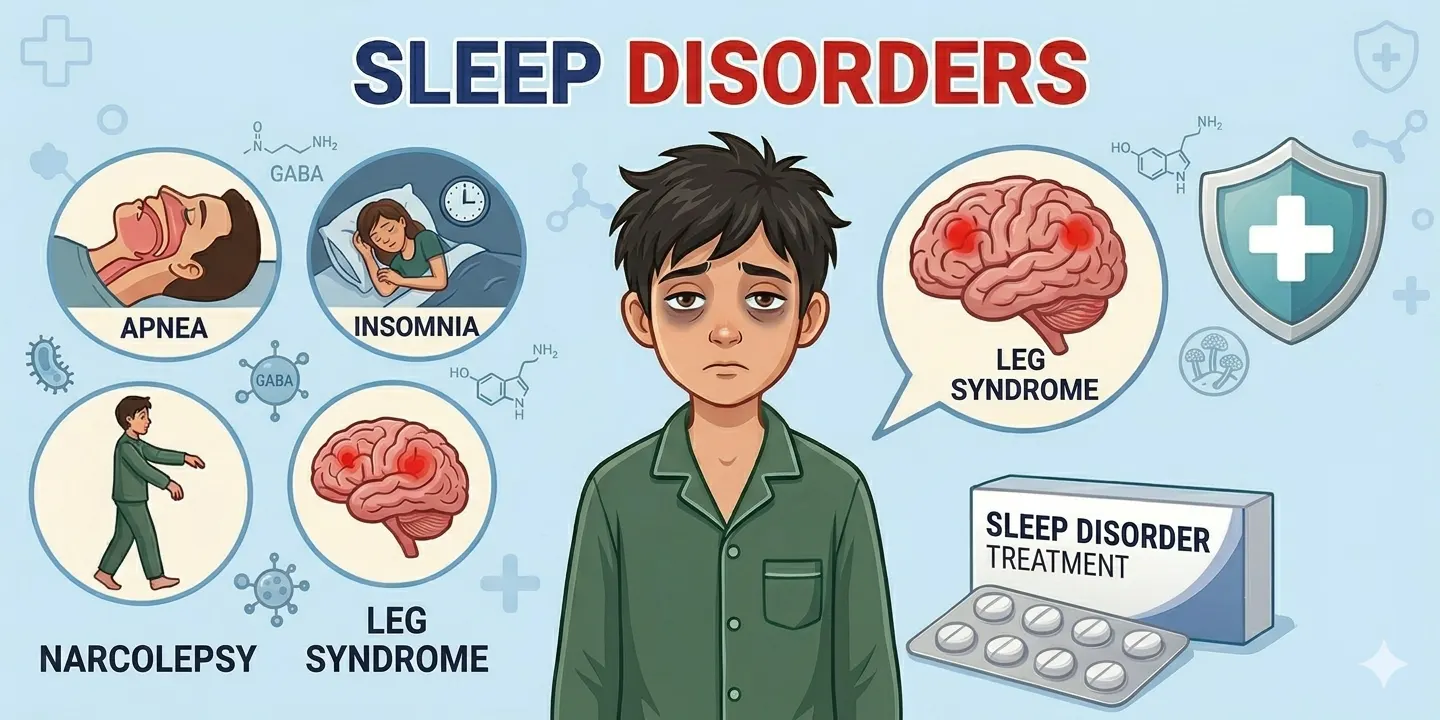
Sleep disorders are determined as conditions that affect the quality, timing, and also the duration of sleep, and this makes it difficult for people to get the desired rest. Since poor sleep can negatively impact the-
- physical health
- mental well-being
- work performance
- and the overall quality of life
But in case of occasional sleep disturbances, persistent sleep problems may also indicate an underlying sleep disorder that requires medical attention.
What Are Sleep Disorders?
Sleep disorders is a medical problem and interfere with day-to-day routine. They can affect the person’s ability to-.
- fall asleep
- stay asleep
- achieve restful sleep
- maintain a healthy sleep
There are thousands and even millions of peple suffer from mild and temporary to severe and chronic conditions.
Common types of sleep disorders
➤ Insomnia
One of the most common sleep disorders and it involves the phase where people experience difficulty of sleep, staying asleep and even waking up too early and then unable to return to sleep.
Some major symptoms are-
● Trouble falling asleep in the night time.
● Wakening up frequently in night
● You are waking up too early
● Daytime fatigue and irritation at the same time
➤ Sleep apnea
It is a serious sleep condition where people face breathing problem on repetition basis. The most common form is obstructive sleep apnea (OSA).
Major symptoms seen are-
● loud snoring
● gasping in the air during sleep
● morning headache
● excessive daytime sleepiness
● and also difficult in concentrating.
➤ Restless Legs Syndrome (RLS)
This condition causes an uncontrolled urge to move legs and this usually happens due to the uncomfortable sensations. Symptoms often worsen during the rest and at night.
➤ Symptoms are-
Tingling or crawling sensations in the legs, a strong urge to move legs, symptoms worsen at bedtime and also sleep disruption.
➤ Narcolepsy
A neurological disorder, that affect the brains ability to regulate the sleep and even wakefulness.
Major symptoms are- excessive daytime sleepiness, sudden sleep attacks, sleep paralysis, hallucinations and even sudden muscle weakness.
➤ Circadian Rhythm Sleep Disorders
These disorders occur when the body’s internal clock is misaligned with the external environment.
Symptoms involved are- difficulty sleeping at the desired time, excessive daytime sleepiness and also reduced alternes and performance.
Different causes of sleep disorders
There are several factors that can contribute to the development of sleep disorders and including-
- Stress
- Depression
- Anxiety
- Chronic pain
- Neurological disorder
- Irregular work schedules
- Hormonal changes
- Obesity
- Intake of certain medications
- Following poor sleep habits
Some risk factors involved
There might be the case where certain individuals might have a higher risk of developing sleep disorders and they are-
Category of older adults
Shift workers
People who suffer with chronic medical conditions
Individuals who are experiencing high level of stress
Those with the family history of sleep disorder
Different symptoms of sleep disorder
The symptoms vary depending upon the specific conditions, and that majorly involves- when you experience difficulty in falling asleep
Frequent waking during the daytime
Excessive daytime fatigue
Interruption of breathing during sleep
Poor concentration and memory
Morning headache
Reduced productivity
Impact of Sleep Disorders on Health
➤ Physical health effects
Sleep disorder can have a negative affect the overall physical health and thereby preventing your body from getting rest. Since, poor sleep has been linked with the increased conditions such as-
● blood pressure
● heart disease
● obesity
● diabetes
and a weakened immune system and thereby making individuals to suffer with different health complications.
➤ Mental health effects
Individuals should follow adequate sleep and to control both emotional and psychological well-being. If not controlled then sleep disorders can contribute-
- Anxiety
- Depression
- Irritation
- mood swings and even difficulty in managing stress.
Over the time, chronic sleep deprivation may also affect memory, concentration, and decision-making abilities.
➤ Social and Professional Effects
Sleep disorder does have an impact on daily performance and relationships thereby causing fatigue, decreases productivity, reduce focus. Individuals who are struggling with work or school, experience lower job performance, and it is difficult to maintain a healthy social interaction.
Treatment Options for Sleep Disorders
Treatment depends upon the type of sleep disorder individuals are encountering with. But some of the major one’s are-
Changes in lifestyle
People suffering with any sleeping disorder, should maintain a consistent sleep schedule.
Try to create a comfortable environment for sleep.
Consuming caffeine and alcohol intake should be limited.
Exercise on regular basis
Before bedtime it is advisable to reduce screentime
Cognitive Behavioral Therapy
CBT is often considered one of the most effective treatments for chronic Insomnia. This technique helps individuals to identify and change thoughts along with behaviour that can interfere with the sleep.
Medical treatments
Depending upon the type of conditions, healthcare expert may recommend some of the sleep medications.
There can be continuous positive airway pressure (CPAP) therapy for sleep apnea.
Medications recommended for restless legs syndrome
Wakefulness-promoting drug to control narcolepsy.
Treatment of underlying medical conditions.
Following relaxation techniques which include meditation, deep breathing exercises, progressive muscle relaxation, mindfulness practice, and yoga.
When to seek medical expert advise
Medical expert advise is required when you are experiencing difficulty in sleeping, facing excessive daytime sleepiness, sudden sleep attacks, breathing pauses, sleeping problems affecting day to day functioning.
Doctors even suggest some preventive measures and they are-
People are advised to go to bed during the same time each day.
Avoid consuming large or heavy meals during bedtime.
Keeping bedroom cool, dark and quite.
Management of stress.
Avoid using electronic gadgets during bedtime.
Conclusion
Sleep disorders are quite common among these days and affecting physical health, mental condition, and even daily performance. It is advised for an early recognition, proper diagnosis, and also appropriate treatment.
By undertaking all of these, quality of sleep and overall life can be improved. Moreover, it is advisable to follow a healthy living and seeking medical expert help at the right time is very important.
Ready to order with confidence?
Choose your pack size, checkout in minutes, and track discreet delivery anywhere in Australia.
- Verified pharmacy
- Secure checkout
- AU-wide delivery
Speak with our team
Australian support for product questions and delivery, Mon–Fri, 9am–5pm AEST.
Contact support