
Skin conditions
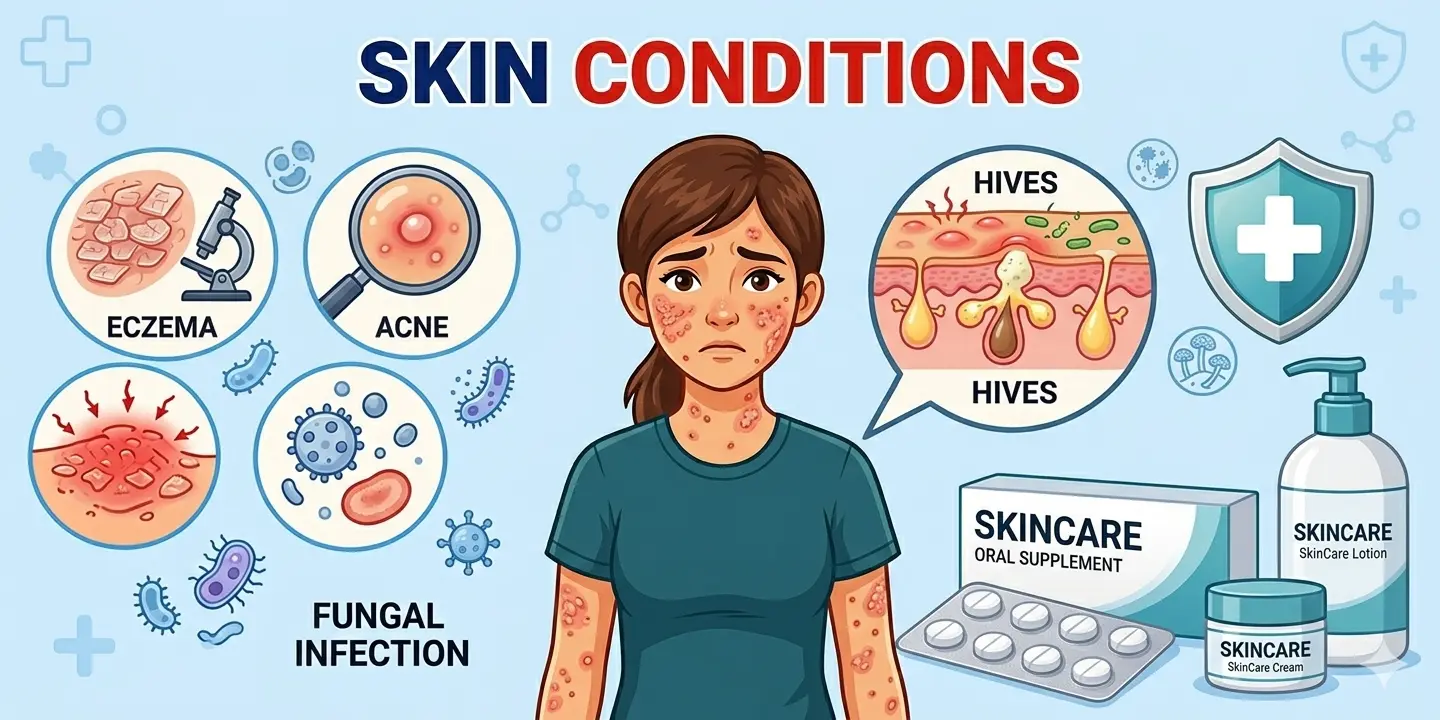
Learn about different skin conditions, what causes them, available treatments, and expert recommendations for maintaining healthy skin.
With the right marketing partner, you don’t need to worry about what to post–you just need to focus on creating beautiful smiles while professionals handle your social media.
We all crave healthy skin care, not just to look good but to gain confidence. Being the largest organ, skin does help people as a protective barrier, which is possibly against-
- harmful bacteria
- viruses
- environmental pollutants
- and even external factors.
Yet various skin conditions can affect people of all ages and skin types, thereby causing-
➛ discomfort
➛ irritation
➛ and in some cases
➛ Affecting confidence and quality of life.
Skin conditions can range from mild and temporary concerns to chronic disorder and that require long-term management. Whether you are dealing with-
- persistent acne
- eczema
- psoriasis
- fungal infections
- allergic reactions
- or unexplained skin changes
Hence, timely diagnosis and proper treatment are crucial for maintaining healthy skin and preventing complications.
What Are Skin Conditions?
Skin conditions can be different and come under a variety of disorders that impact your skin’s appearance, colour, functionality, and even texture. Due to some common conditions like-
- genetic factors
- allergic reactions
- immune system disorders
- changes in hormones
- environmental factors and even lifestyle habits.
And even many skin conditions share a similar symptom, which makes it an important step for people to determine the underlying cause. Therefore, with proper diagnosis and medical expert advice, it is important to take a proper treatment plan.
Common types of skin conditions
➤ Acne
Acne is one of the most common skin conditions worldwide. This occurs when hair follicles become clogged with-
- oil
- dead skin cells
- and bacteria.
Acne can appear as-
- Blackheads
- Whiteheads
- Pimples
- cysts
- or nodules
- and even commonly affect the face, chest, shoulders, and back.
Different factors that can contribute to acne are-
- Fluctuations in hormones
- stress
- certain drugs
- generic
- Skincare products that clog pores.
➤ Eczema (Atopic Dermatitis)
Eczema is one of the chronic inflammatory skin conditions that causes-
- dry
- itchy
- red
- and irritated skin.
These can impact both adults/children at the same time and could be major to mild.
Though some triggers found are-
- allergens
- harsh soaps/detergents
- stress
- changes in weather
- and even certain fabrics or chemicals.
➤ Psoriasis
Psoriasis is one of the autoimmune conditions that helps to accelerate the skin cell renewal process. This results in the skin cell accumulation rapidly on the surface, thereby forming thick, red, and even scaly patches- can be either painful or also itchy.
Psoriasis can no doubt affect different areas of the body, including-
scalp, elbows, knees, lower back, hands, and even feet.
➤ Rosacea
It is one of the chronic skin conditions that can primarily affect the face. It therefore causes a persistent redness, visible blood vessels, flushing, and even sometimes acne-like bumps. Some common triggers are-
- alcohol
- stress
- sun exposure
- hot beverages
- extreme temperature
- intake of spicy foods
➤ Fungal Skin Infections
Fungal infection surrounds people when fungi grow more on the skin. These infections can develop in warm and even moist areas of the body. Common fungal infections are-
- ringworm
- Jock itch
- Athlete’s foot and also Yeast infections.
➤ Skin Allergies
Skin allergies take place when the immune system reacts to substances that are normally harmless. These reactions can lead to redness, itching, swelling, hives, or rashes.
Common triggers are cosmetics, fragrances, certain foods, medicines, environmental allergens, and even metals such as nickel.
➤ Vitiligo
Vitiligo is a problem that happens when pigmented cells in the skin stop functioning, thereby leading to white patches. This happens on various parts of the body, but remember it is not contagious, and it can affect people of all skin types.
Warts and Other Skin Growths
Warts are benign skin growths that are caused by certain strains of the human’s papillomavirus. While generally harmless, they may be bothersome, spread to other areas, or affect appearance. Some other common skin growths include-
➛ moles
➛ skin tags
➛ Seborrheic keratoses and Benign cysts
Symptoms That May Indicate a Skin Condition
- Skin conditions can present with a variety of symptoms like-
- Dry, cracked, or flaky skin
- Swelling
- Excessive oiliness
- Persistent itching
- Painful lesions
- Changes in moles
- Rashes or bumps
- peeling skin
- Skin discoloration
Different causes and risk factors
Some of the factors that can majorly put a contribution towards the development of skin conditions and those are-
Genetic factors that might involve psoriasis, eczema, and vitiligo, which might run in families.
Some environmental factors, like harsh weather conditions, pollutants, allergens, and even irritants.
Changes in hormones involve fluctuations at the time of puberty, during pregnancy, and even at the time of other medical problems. This can contribute to acne and even other skin problems.
An immune disorder that may cause the body’s immune system to attack healthy skin cells.
Some lifestyle factors like-
➺ stress
➺ poor nutrition
➺ insufficient hydration
➺ smoking
➺ And lack of proper skincare is also a major source.
Process of diagnosis and evaluation
There is a need for an accurate diagnosis for effective treatment, and that requires a –
- detailed medical history
- physical skin examination
- allergy testing
- Skin biopsy when required
- Laboratory testing
- review of lifestyle and environmental factors
Different treatment options
Treatment depends upon the severity and even the type of infections; however, some common treatment approaches are-
Topical treatment
Make use of Creams, ointments, gels, and medicated lotions as they help to reduce inflammation, itching, and infection at the same time.
Oral dose
Some skin conditions that does require oral antibiotics, antifungal drugs, antihistamines, or other prescription treatments.
Changes in lifestyle
Advisable to improve your daily skincare routine, try to manage stress, and even maintain a healthy lifestyle that can support long-term skin health and its maintenance.
Ongoing management
Chronic skin conditions often benefit from regular monitoring and long-term treatment strategies to prevent flare-ups and even maintain symptom control.
Conclusion
Different skin conditions can for sure have an impact on either your physical comfort or on self-confidence. This is where the major concern arises to take control of proper treatment after diagnosis. From acne to eczema and to the chronic conditions (psoriasis and vitiligo), it is important to determine the underlying cause.
Upon complete diagnosis, it is advisable to follow a proper treatment plan, with ongoing skin care, as many skin conditions can be controlled with proper care.
Ready to order with confidence?
Choose your pack size, checkout in minutes, and track discreet delivery anywhere in Australia.
- Verified pharmacy
- Secure checkout
- AU-wide delivery
Speak with our team
Australian support for product questions and delivery, Mon–Fri, 9am–5pm AEST.
Contact support