
Mental Health Conditions
Access trusted Australian mental health resources covering depression, anxiety, PTSD, bipolar disorder, and other common mental health conditions.
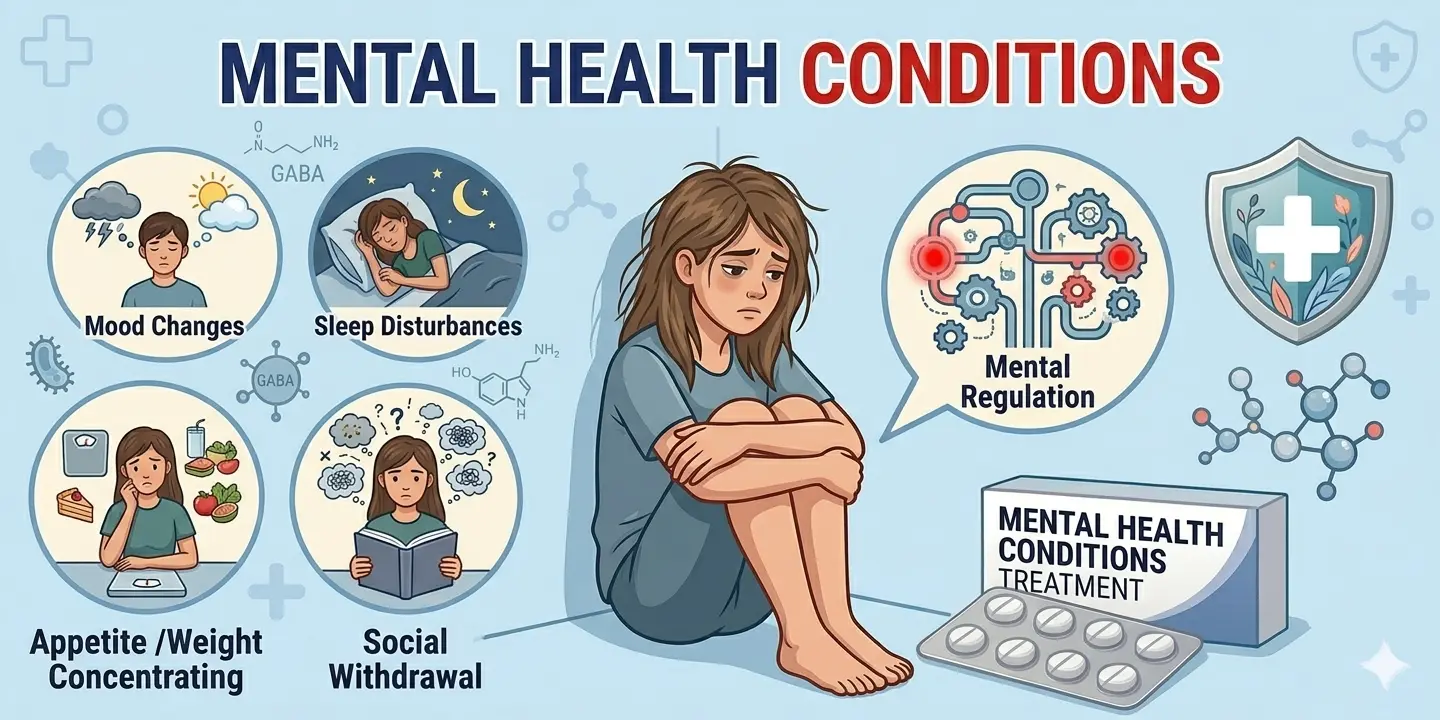
Mental health conditions are mainly defined as disorders that mainly affects person’s-
● Thoughts
● Emotions
● Behavior
● and overall psychological well-being.
All of these conditions can influence how individuals can cope with stress, interact with others and even make decisions. No doubt, at present time, mental health conditions are quite common and can affect people of all ages, their background and lifestyle. But with proper diagnosis, treatment many individuals can effectively manage their symptoms and leads a fulfilling life.
What are mental health conditions?
Mental health conditions are known as mental disorders and even mental illness that can impact overall-
● Mood
● Thinking
● Behavior
● or emotional regulation.
They can even range from either mild or also major or may be temporary and even long-lasting. However, these conditions are not simply occasional feelings, sadness, stress and worry.
Common Types of Mental Health Conditions
Anxiety disorders
This conditions involve excessive fear, nervousness or even worry that is very difficult to control and that may interfere with the day to day activities.
Examples are- Generalized Anxiety Disorder, panic disorder, social anxiety disorder.
People can undergo different symptoms are- constant worry, Sweating, disturbance in sleep, Restlessness, difficult in concentration.
Depressive Disorders
Depression is the part of-
- persistent sadness
- loss of interest in activities
- and a decrease in energy
- and motivation.
➤ Different symptoms are
- ongoing feeling of sadness
- loss of interest in hobbies
- fatigue, sleep problems
- changes in appetite
- difficulty in concentrating.
Bipolar Disorder
Bipolar disorder can cause, significant shift in energy level, mood, and even activities. Individuals here can experience period of depression, episodes of unusual elevated mood known as mania or hypomania.
Some symptoms that can be seen are-
- extreme changes in mood
- increased energy during manic episodes
- period of sadness
- sleep pattern changes
- and also impulsive behaviour.
Post-Traumatic Stress Disorder
PTSD can be established after feeling or even witnessing a traumatic event. Some major symptoms are-
● Nightmares
● Flashbacks
● Emotional distress
● Avoiding of trauma related situations
● Increased anxiety.
Eating Disorders
This particular disorder involves unhealthy relationship either with-
- Food
- eating behaviour
- and also body image.
Some examples are- Anorexia Nervosa, Bulimia Nervosa and also Binge Eating Disorder.
● Different symptoms are-
● Fear of weight gain
● Extreme dieting
● Unhealthy eating patterns
● Distorted body image
Different cause of mental health conditions
Genetic Predisposition
It is known as the family history of mental health disorder and that can increase the risk of developing similar conditions.
Imbalance in brain chemistry
Changes in neurotransmitter and even brain functionality that can impact mood, emotions, and behaviour.
Traumatic experience
Some major events like abuse, violence, accidents, or loss can even have a lasting psychological effect.
Chronic stress
The long-term stress from either work, relationship and even finances can have a negative impact on mental well-being.
Substance misuse
When you are consuming excessive alcohol then it can even impact your mental status in an negative manner.
Medical conditions
Some physical illness and even neurological disorder can affect both mental and emotional health.
Social isolation
When there is a limited social interaction and even lack of support can lead to the feelings of loneliness and emotional distress.
Changes in life
Some events like-
- Divorce
- job loss
- or relocation can trigger mental health challenges.
Environmental influences
When you are being exposed to an unhealthy condition, when there is a discrimination, and even a community stressor then it does have an impact on mental well-being.
Common Symptoms
Different symptoms that individuals can undergo are-
- Changes in appetite
- Low level of energy
- Difficulty in concentrating
- Irritability
- Social withdrawal
- Excessive worries or fear
- Mood swings
Impact of Mental Health Conditions on Daily Life
Physical health impact
Mental health issues can impact physical well-being by contributing
- sleep disturbance
- fatigue
- chronic pain
- weakened immunity
- and even increased risk of cardiovascular and other health problems.
Emotional impact
Such conditions can lead to difficulty in the management of emotions, reduced self-esteem, increased stress and even challenges in coping with everyday situations.
Social and Professional Impact
Mental health conditions can also interfere with the workplace productivity, relationships, academic performance and even social management and thereby making daily responsibilities more challenging.
Diagnosis of Mental Health Conditions
Healthcare expert can take different methods or steps to manage mental health conditions-
There can be clinical interviews
Some psychological assessments can be done
Expert can undergo medical history review
Behavioural observations
Some people can even undergo Mental health screening questionnaires
Moreover, physical examinations can be taken
Different treatment methods for mental health conditions
Psychotherapy
Talk therapy can help individuals to understand their thoughts easily, emotions and behaviors while developing healthier coping strategies.
This includes some common approaches like- Dialectical Behavior Therapy, Cognitive Behavioral Therapy, Interpersonal Therapy and also Family Therapy
Intake of medications
The drugs are given on the basis of conditions and therein healthcare expert provides-
● Antidepressants
● Anti-anxiety medicines
● Mood stabilizers
● Antipsychotic medications
Changes in lifestyle
Once a healthy lifestyle is supported then it can help a stable mental well-being and this involves- to perform regular exercise, quality sleep, balanced nutrition, limiting use of alcohol and even social connection.
Support system
Support from either of family, friends, groups and even mental health professionals does play an important role in recovery and symptoms management.
Prevention and Mental Wellness Tips
It has been stated that not all mental health conditions can be prevented but the following practice can help to maintain a mental well-being.
Try to manage stress in an effective manner
Maintaining healthy relationships
Staying physically active
Must prioritize your sleep
Practice some relaxation techniques
Seek an early help when symptoms arise
Maintaining a healthy work life balance
When to seek medical expert help?
It is very important to seek medical expert help in the case-
Where symptoms persist for several weeks to longer
Interfere with work, relationships and schools at the same time.
Causing significant emotional distress
Leading to substance misuse
Conclude
The occurrence of mental disorders in today’s generation is quite widespread and can have an effect on the emotions, psychological state, and social functioning of a person. Over at buyivermectinaustralia, we recognize that mental health awareness is one of the key aspects towards holistic well-being. The disorders may vary from anxiety to depression, and even more severe cases, like bipolar disorder and schizophrenia.
It is advisable for an early recognition and suitable treatment that can give a desired outcomes and in turn help individuals to lead healthy, productive, and meaningful lives.
Ready to order with confidence?
Choose your pack size, checkout in minutes, and track discreet delivery anywhere in Australia.
- Verified pharmacy
- Secure checkout
- AU-wide delivery
Speak with our team
Australian support for product questions and delivery, Mon–Fri, 9am–5pm AEST.
Contact support